
Cockroaches and drains: Everything you need to know to eradicate them
Contents
-
Siphon invasion: Scientific analysis and vulnerability criteria
-
Home remedies vs. professional solutions: Performance comparison
-
Buying guide and recommendations: Choosing anti-rebound devices
You've turned on the bathroom light in the middle of the night, and a brown silhouette has darted towards the shower drain. Don't panic, but don't deny it either: if one cockroach comes out of your drain, there are others behind it. And they haven't gone the wrong way. Your plumbing network is their highway.
Things to remember
-
A scientific exploration of cockroaches' ability to navigate plumbing systems
-
We compare the effectiveness of physical barriers, natural solutions and professional treatments for permanently blocking access to drains.
-
Scientific analysis and vulnerability criteria
-
Compare the different options before deciding.
What we're going to do here is set things out clearly. First, to understand why cockroaches in the bathroom are no accident, but a direct consequence of the biology of these insects and the design of our installations. Then, we'll compare what really works, from baking soda to professional interventions, with figures to back it up. And finally, to give you a practical guide to choosing the right devices and locking down your drains once and for all.
No miracle recipes, no smoke and mirrors. Just science, field feedback and tested recommendations.
Siphon invasion: Scientific analysis and vulnerability criteria
A number to start with: Periplaneta americana, the American cockroach, can hold its breath for 40 minutes. Forty. That's according to a study published in the Journal of Experimental Biology who documented it. This means that crossing a water-filled siphon isn't an obstacle for her, it's just a slightly damp passage.
Cockroach biology explains almost everything. These insects are thigmotactic: they seek permanent contact with surfaces. A 32 mm diameter pipe is paradise. Their exoskeleton is flexible and compressible. An adult German cockroach (Blattella germanica) can flatten out to fit through a 3 mm slot. Three millimeters. Look at the space around your shower trap, between the drain and the shower tray. This threshold is often far exceeded.
Why do cockroaches come out after your shower? The answer is simple: hot water and steam create a tropical microclimate in your pipes. The temperature rises, humidity reaches 90 to 100%, and organic residues (hair, soap, skin cells) accumulate in the siphon. For a cockroach, it's a buffet in a spa. The shower water temporarily disturbs them, so they climb back up. You catch them in the middle of a leak, not in the middle of an arrival.
The real problem is the dry trap. A siphon works thanks to a water trap, that little liquid plug that prevents odors and, incidentally, bugs from rising up. When a shower or sink is not used for several days (vacation, guest room, second home), the water evaporates. The siphon empties. And that's the royal road from the sewer to your tiles.
Vulnerability criteria are fairly predictable:
-
Old plumbing. Buildings built before the 1980s often have poorly jointed connections, cracked cast-iron pipes and leaky passages between apartments.
-
First floor and basement. The closer you are to the sewer system, the greater the infestation pressure. A University of Florida study (Koehler & Patterson, 2015) shows that 78% of residential infestations by Periplaneta americana concern the first two levels of a building.
-
Unused siphons. The bidet nobody uses, the second-floor shower, the sink overflow: all open doors.
-
Pests and humidity. A leak under the shower tray, a moldy bathtub seal, permanent condensation: these conditions attract and maintain colonies.
Can cockroaches get into drains? The answer is a resounding yes. This is no urban legend. It's been documented, filmed and measured. And it's the main route of entry into apartment buildings. Your downstairs neighbor has a problem? You'll have it too, unless your drains are in good condition and always running.
One final point that often comes as a surprise: cockroaches don't just come up through the shower. Cockroaches in the sink drain are just as common. The bathtub overflow, which doesn't have its own siphon, is a classic. And the washing machine, if its drain is connected directly without a valve, is an invitation.
Home remedies vs. professional solutions: Performance comparison
Let's be honest: when you discover cockroaches in your shower, the first thing you do is Google, then go to the chemist or supermarket. Then you come across an avalanche of «grandmother's recipes». Some of them are true. Others are a complete waste of time.
Baking soda. It's everywhere. Mixed with sugar, it's supposed to swell cockroaches' stomachs and kill them. In reality, the effectiveness is very low. A Purdue University study (2019) compared baking soda to a neutral control: the additional mortality was 12% over 14 days. Twelve percent. On a colony of several hundred individuals, that's insignificant. Baking soda is excellent for cleaning your drains and reducing the organic residues that attract cockroaches. As an insecticide, forget it.
Boric acid. Now we're in another category. Boric acid is a real insecticide, in use since the 1940s. Its mode of action is well understood: ingested, it destroys the cockroach's intestinal epithelium. Insecticidal efficacy has been documented at 95-99% mortality in 7 to 10 days under controlled conditions (Cochran, 1995). The problem? Application. You need to deposit a thin layer of powder in areas of passage, not in piles. Too much, and the cockroaches bypass it. Not enough, and it doesn't work. And in a damp bathroom, the powder clumps together and loses its effectiveness within a few days.
White vinegar, essential oils, bay leaves. Repellents at best, useless at worst. None of these substances kills cockroaches. They may disturb them temporarily, causing them to change their habits. But repelling is not eliminating. If the colony has settled in your drains or behind your walls, a little peppermint won't make any difference.
Let's move on to professional solutions.
Professional bait gel. It's now the industry standard, and for good reason. Gels based on fipronil or indoxacarb exploit a key cockroach behavior: coprophagy and necrophagy. A cockroach eats the gel, returns to the nest, dies, and is eaten by other cockroaches. The cascade effect can eliminate 90 to 95% from a colony in two to three weeks. Field studies published in Pest Management Science repeatedly confirm these figures. A professional applicator places the gel in strategic points: under siphons, behind plumbing plates, along service ducts. Places that private individuals don't always think of treating.
The question of price. How much does an exterminator cost? For a standard apartment, expect to pay between 100 and 250 euros for an initial treatment with bait gel, including follow-up. This is the average price in Belgium in 2024. Expensive? Compare this with the cumulative cost of aerosol cans (10 to 15 euros each, virtually ineffective on hidden colonies), sticky traps (useful for monitoring, not eradication) and wasted time. The price of a professional exterminator often pays for itself in a single visit.
Commercial spray cans. A word on that, because it's most people's first purchase. Aerosol pyrethroids kill cockroaches on contact, yes. The problem: they have a powerful repellent effect. As a result, cockroaches flee the treated area and disperse to other rooms, other apartments. Have you solved your cockroach problem in the shower? No, you've moved them into the kitchen. And you've made the colony harder to reach for further treatment.
My opinion is clear-cut: for an isolated cockroach spotted once, a sticky trap and thorough cleaning of the siphons may suffice. As soon as you see two, or one in broad daylight (sign of a saturated colony), go straight to professional bait gel. The cost-effectiveness ratio is incomparable.
Buying guide and recommendations: Choosing anti-rebound devices
Killing cockroaches is one thing. Blocking their access is quite another. And it's this second step that many people neglect. You can treat your apartment ten times over: if the path from the sewers remains open, the rising drains will continue to deliver you unwanted new tenants.
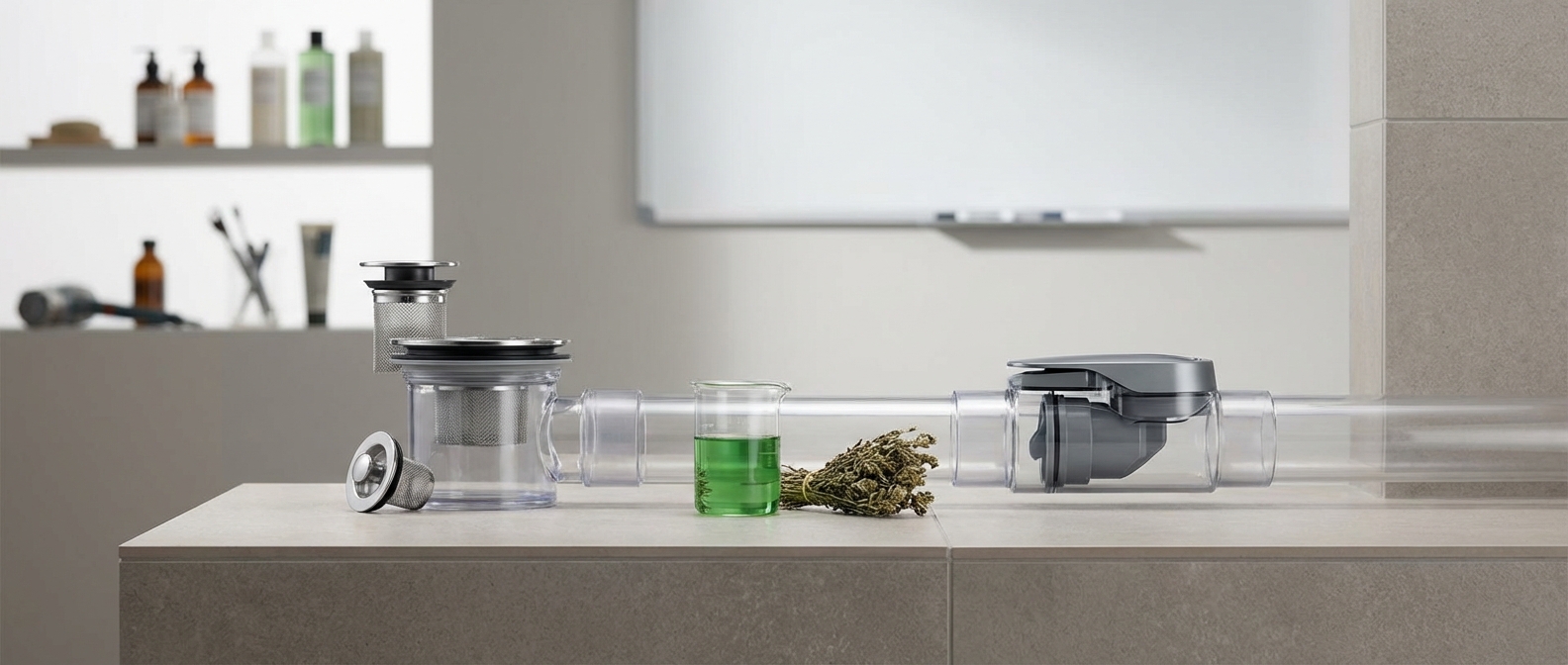
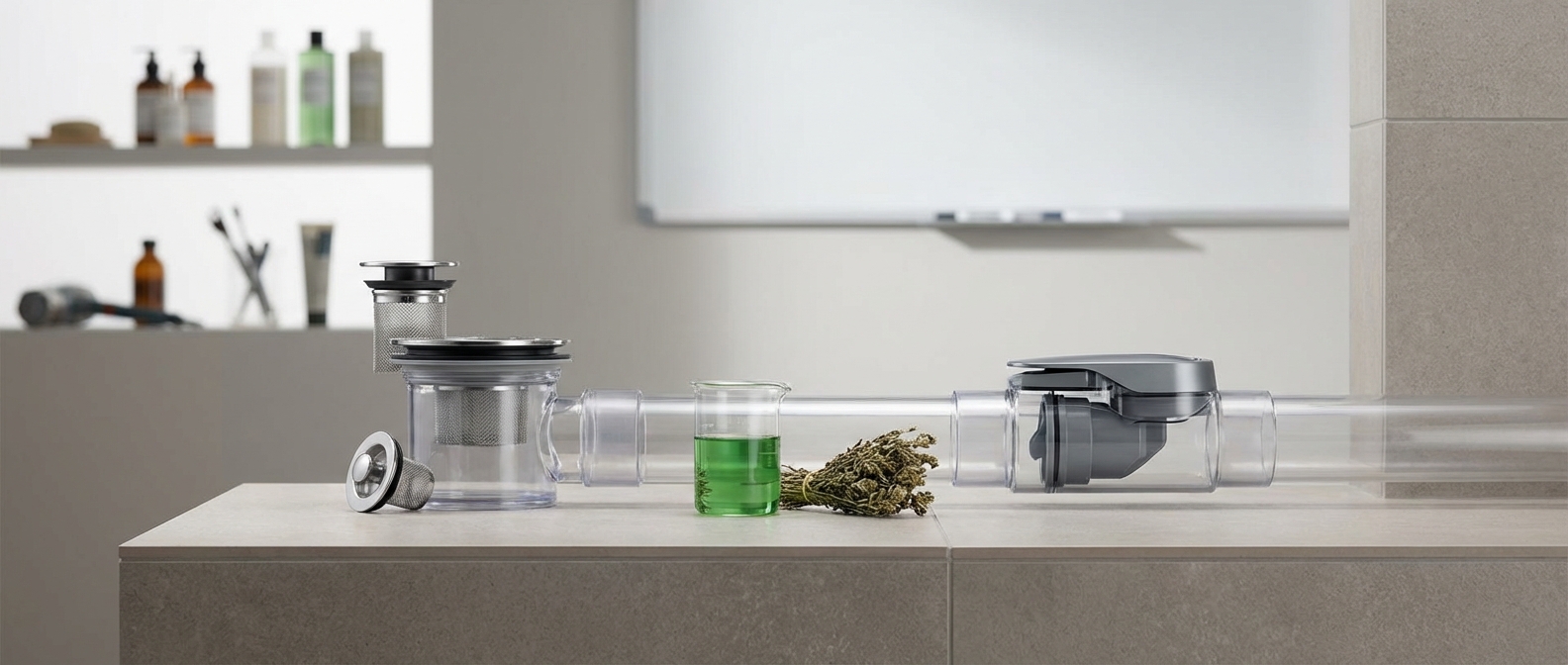
Non-return valve. This is by far the most effective device. A non-return valve is installed on the drain pipe (usually the 40 or 50 mm pipe under the shower tray or washbasin). It allows water to flow normally down the drain, but prevents any backflow of water, stale air or cockroaches. PVC models cost between 15 and 40 euros. Installation is accessible if you have a minimum of tools and access to your pipes. With a concealed shower trap, installation is more complicated: you may have to dismantle the inspection hatch or call in a plumber.
There's one detail that makes all the difference: the valve must be installed in the correct position. after the siphon, not before. Otherwise, you prevent water from draining normally. And you need to clean it once or twice a year, because hair and soap clog it up.
The drain grate. A simpler, less radical solution, but useful as a complement. A fine bung screen (mesh size less than 2 mm) prevents the passage of adult cockroaches and large nymphs. These are available in stainless steel for between 5 and 15 euros. The trick is to choose a model adapted to the exact diameter of your drain: 60 mm, 90 mm or 115 mm for walk-in showers. An ill-fitting grate leaves gaps around the edges. You might as well leave it alone.
For sinks and washbasins, think too of the overflow. This small hole at the top of the basin communicates directly with the drain pipe, bypassing the siphon. Cockroaches know this. You can fit a small stainless steel mesh filter over the inner opening, or plug the overflow with a silicone plug if you don't need it (provided you never let the water run down to this level).
Watertight plumbing in the broadest sense. It's not as glamorous as a tabletop gadget, but it's essential. Walk around your bathroom with a flashlight. Have a look:
-
Pipe passages through walls and floors. There's often a gap of a few millimeters around the pipe. Fill it with silicone sealant or polyurethane foam.
-
Joints between shower tray and tiles. A loose joint is a doorway.
-
Technical ducts and meter boxes. In apartment buildings, these spaces are rarely watertight between floors.
Watertight plumbing is all about detail. Every crack, every gap counts. A German cockroach fits into 3 mm, I repeat, because that's the number that must guide your entire inspection.
Summary of devices :
-
Check valve (€15-40) The "B" system: maximum efficiency, physically blocks the ascent. Requires access to discharge pipe.
-
Fine bung grate (€5-15) Good complement, easy to install. Does not protect against side passages or overflow.
-
Silicone putty / PU foam (€5-10) Essential for sealing pipe penetrations. Repeat every 3 to 5 years.
-
Overflow plug (2-5 €) simple, effective, often forgotten.
One last practical tip: if you're going on vacation, pour a tablespoon of vegetable oil down each drain. The oil floats on the trap's water guard and slows evaporation considerably. Your trap stays wet, and the cockroaches stay in the drains. It's simple, it's free and it works.
Conclusion
Cockroaches in the shower are not inevitable. It's a mechanical and biological problem, with mechanical and biological solutions. Understanding that cockroaches use your pipes as traffic corridors is half the battle. The other half involves acting on both fronts at the same time: eliminating the colony with a professional bait gel, and blocking access with non-return valves, drain screens and a perfect seal.
Don't waste time on solutions that «push back». Kill and block. If the infestation goes beyond the isolated cockroach stage, call in a qualified professional. The cost is modest compared with weeks of ineffective solo treatments. Above all, inspect your drains regularly, keep them filled with water and seal each time you use them. Cockroaches are tenacious, but they don't get through silicone.
Frequently asked questions
Can cockroaches really crawl up shower pipes?
Yes, it's a major route of entry. The American cockroach can hold its breath for up to 40 minutes, enabling it to pass easily through a water-filled siphon and emerge in your bathroom or kitchen.
Why do cockroaches emerge from siphons after a shower?
Hot water creates a tropical microclimate (heat and humidity at 90%) that cockroaches love. They come up to consume the organic residues (hair, soap) accumulated in the siphon or to escape the temporary immersion during drainage.
Do white vinegar or bicarbonate eliminate colonies in pipes?
No, these solutions are ineffective for eradication. While bicarbonate helps clean out the grease that attracts insects, it doesn't kill the colony; only a professional bait gel with a cascade effect can eliminate cockroaches nestling in drains.
How do you physically block the return of cockroaches?
The most reliable solution is to install a non-return valve on your drain. To complement this, use fine-mesh bung screens (less than 2 mm) and seal gaps around pipes with silicone sealant to keep intruders out.
What can be done to prevent vacation intrusion?
The absence of use causes the water in the traps to evaporate, creating a royal road for pests. Pour a tablespoon of vegetable oil into your bungs before leaving: the oil will create a protective film limiting evaporation and maintaining the hydraulic barrier.
When should I contact an exterminator about a drain problem?
As soon as you see more than one individual or cockroach in broad daylight. This usually means that the colony in the service duct or plumbing system is saturated, and that targeted treatment by a professional is urgently needed to stop the spread.
 Français de Belgique
  English
  Nederlands (België)