
Can rats get up the toilet? The complete guide
Contents
-
Myth or reality: Why do rats choose your toilet over the sewer?
-
Drains vs. wall openings: Where do rats really get into your home?
-
Non-return valves or natural solutions: Our recommendations for securing your toilets
You're sitting quietly at home, and there's a strange noise in the toilet bowl. You lift the lid and... a rat stares back at you. Horror scenario? Perhaps. But it's a reality experienced every year by dozens of households in Brussels and throughout Belgium. A rat in the toilet is not an urban legend: it's a real, documented and, above all, avoidable problem.
Things to remember
-
Beyond the visual shock, we analyze the rat's journey from sewer to bowl
-
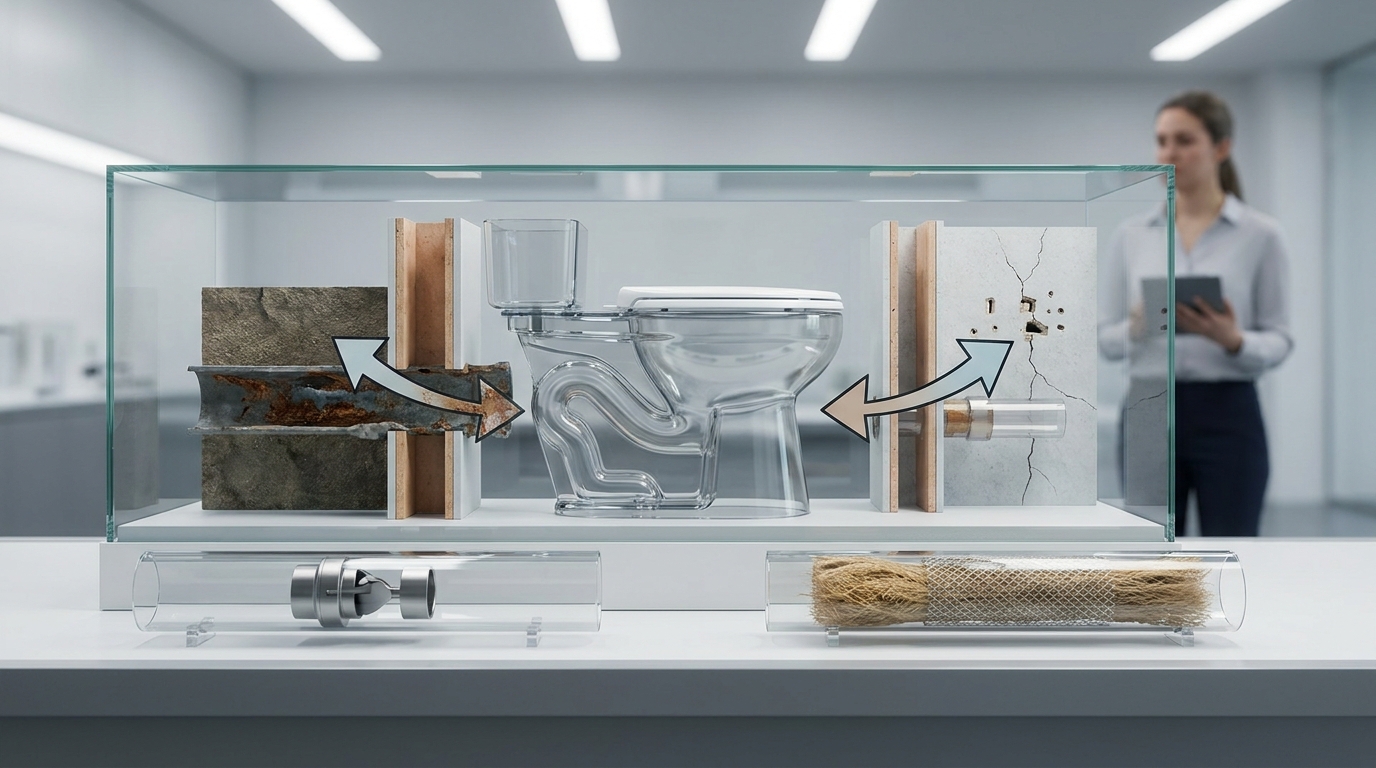
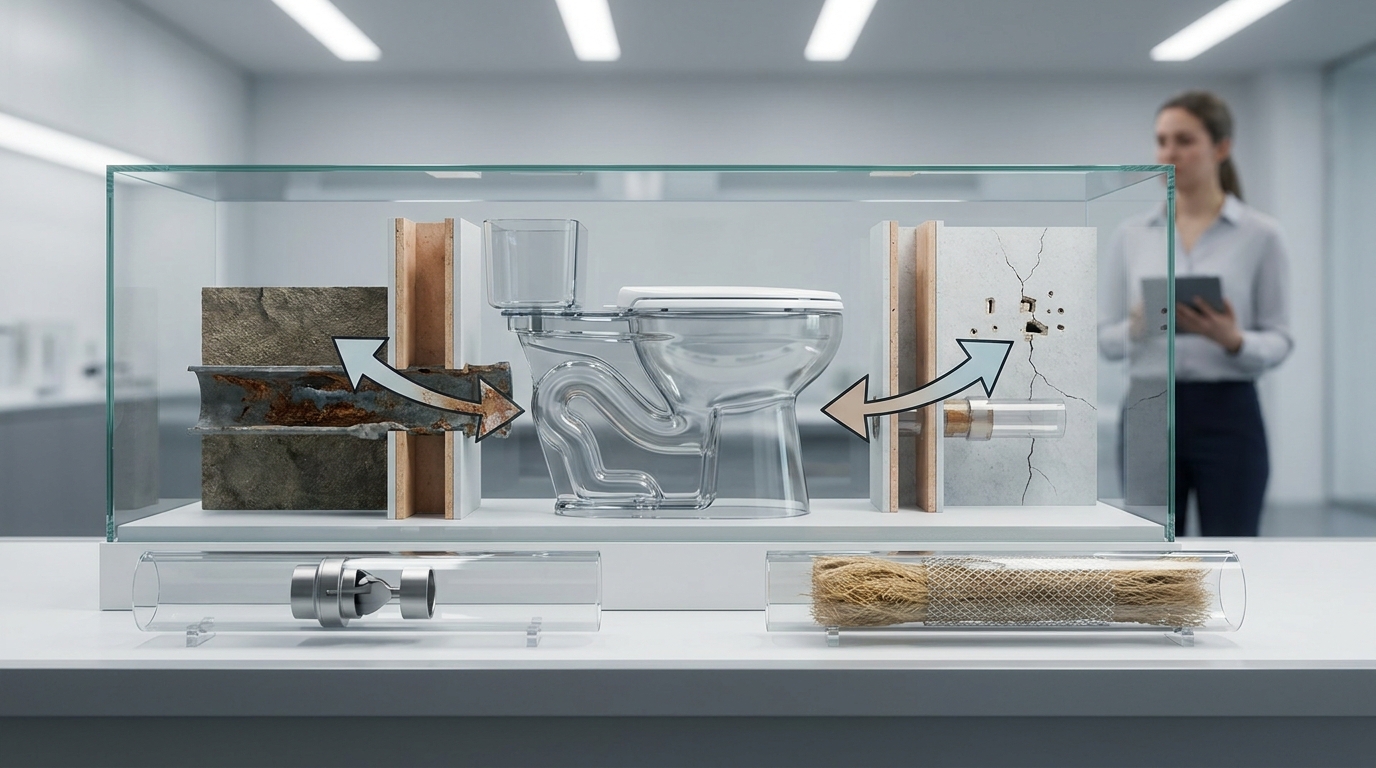
The article compares the different routes of entry (pipes vs. cracks) and assesses preventive solutions.
-
Why do rats choose your toilet over the sewer?
-
Where do rats really enter your home?
What prompted me to write this guide was the number of people who contact me after discovering a rat in the toilet bowl, completely panicked, with no idea what to do. The good news is that we understand exactly how it happens, and there are effective solutions to make sure it never happens again. Let's take a look at the rat's journey from the sewer to your toilet, and see how you can block this route once and for all.
Myth or reality: Why do rats choose your toilet over the sewer?
Let's start with the question on everyone's lips: can a rat really go up the toilet? The answer is an unambiguous yes. Rats, especially the brown rat (Rattus norvegicus), are exceptional swimmers. They can hold their breath for three minutes, swim long distances and, above all, are flexible enough to squeeze through pipes 4 to 5 centimetres in diameter. A standard toilet pipe is around 10 centimetres in diameter. For a rat, that's almost spacious.
The toilet trap, that S-shaped curve that's supposed to prevent odors from rising, is not a serious obstacle for them. The rat dives in, goes under the water, crosses the trap and comes out the other side. The whole operation takes a few seconds. It's impressive, and downright disturbing when you think about it.
But why would a rat leave the sewers, where it has permanent access to food and water, to come back to your home? There are several reasons. Overcrowding in underground networks drives some individuals to seek out new territories. Heavy rainfall floods the galleries, forcing rats to flee upwards. A break or defect in the WC pipe creates direct access between the sewer and your home. And sometimes it's simply the smell of food that attracts them to the surface.
Brussels has an ancient sewer system. Some sections date back to the 19th century. Joints wear out, fittings deteriorate, and every crack in a pipe represents a potential entry point for sewer pests. Toilet rats don't choose your toilet at random: they follow the path of least resistance. If your pipes have the slightest defect, you're on their radar.
A detail few people are aware of: toilets on the first floor and in basements are much more exposed than those on upper floors. The distance between the main sewer and your toilet is shorter, the water pressure in the siphon is sometimes lower, and the rat has less effort to make. If you live in an apartment on the fifth floor, the risk exists, but it's much lower than for a house with a basement toilet directly connected to the main sewer.
What to do if a rat is in your toilet right now? Close the lid immediately, place something heavy on top and don't flush. Flushing is usually not enough to send the animal back down the drain. Contact a professional or your local authority. We'll come back to this in more detail in the last section.
Drains vs. wall openings: Where do rats really get into your home?
We often focus on the toilet, because it's spectacular. But if you look at the figures, rats don't always enter a house through the toilet bowl. Far from it.
Rats exploit every crack in a building. Cracks in walls, however tiny, are a major access route. An adult rat can squeeze through a hole 2 centimetres in diameter, barely the size of a 2 euro coin. The most common weak spots: pipes passing through walls (gas, water, heating), poorly sealed electrical conduits, door thresholds with a daylight underneath, vents without grilles, and cracked foundations.
Cellars are often the first point of entry for rodents in Brussels homes, especially mansions and older semi-detached buildings. Dirt floors, dilapidated brick walls and old coal ducts are all highways for rodents. A rat that enters through the cellar can then circulate throughout the house, passing through partitions, false ceilings and service shafts.
Nevertheless, the toilet pipe remains a specific and dreaded entry point, because it leads directly into your home, into a room where you are vulnerable. Other entry points (cracks in walls, openings in roofs, window seals in basements) are more common in number, but toilet intrusion is the one that stands out the most. And with good reason.
How can you tell where rats are entering your home? Here are a few clues. Droppings along baseboards or behind furniture: rats always follow walls. Traces of blackish grease on passageways: this is the sebum from their fur. Scratching noises in partitions, especially at night. Gnawed cables or plastic pipes. If you find droppings directly in the toilet bowl or in the immediate vicinity of the toilet, then yes, the rat has probably been down the drain.
An important point: a rat in the toilet bowl is often only the visible symptom of a larger problem. If a rat has made its way up your toilet, there's a good chance that your sewer system is defective, that the drainpipe is damaged, or that the sewer connection is compromised. Treating only the symptom (the rat in the toilet) without inspecting the entire system will ensure that the problem returns.
For a complete inspection, a camera pass through the pipes will identify cracks, faulty connections and tree roots that have pierced the pipes. It's an investment, but it gives you a precise map of weak spots. A serious rat exterminator in Brussels will always start by looking for ways in before setting any traps.
Non-return valves or natural solutions: Our recommendations for securing your toilets
So how do you keep rats out of the bathroom? There are several approaches, and not all of them are the same.
The most effective solution, and the one I always recommend, is the check valve, also known as a ratchet valve. This is a mechanical device installed directly in the pipe between the sewer and your home. The principle is simple: water and waste can flow down the drain, but nothing can flow back up. The valve closes automatically as soon as reverse pressure is detected. If a rat tries to go upstream, it faces an insurmountable physical barrier.
There are several types of valve. Valves installed in the main drain (before connection to the sewer) protect the entire dwelling. Toilet dampers are installed directly in the bowl's waste pipe. The choice depends on your configuration. For a single-family home, a valve on the main drain is the best option. For an apartment, a valve directly in the WC drain may be sufficient.
Installing a rat trap costs between 150 and 500 euros, depending on the model and the complexity of the job. It's a modest investment compared to the stress and damage a rodent intrusion can cause. Call in a plumber or pest control professional for installation: a poorly installed valve can cause water to back up.
Visit rodent screen is another complementary solution. It is placed over air vents, ventilation outlets and accessible pipe openings. The mesh size must be less than 1 cm to be effective. Beyond that, a young rat will pass through with no problem.
What about natural solutions? We read a lot on the internet about peppermint, white vinegar, ultrasound, cat litter... Let's be honest: none of these methods has been reliably proven to work against a rat determined to get up your drain. Peppermint may have a mild repellent effect in a confined space, but a hungry or fleeing rat won't be stopped by a scent. Ultrasonic devices? Independent studies show very mixed results, with rats getting used to them within a few days.
For everyday rodent prevention, here's what really works:
-
Keep the toilet lid closed, especially at night and when you're away. It's not an absolute barrier, but it does make it harder for the rat to get out.
-
Never flush food down the toilet. Food scraps in drains attract rats like a magnet.
-
Have your pipes inspected every 3 to 5 years, especially if your house is over 30 years old.
-
Fill all cracks and openings around the pipes with mortite or steel wool (rats can't gnaw through steel).
-
Store your rubbish in closed containers, away from the walls of the house.
If you do find a rat in your toilet bowl, don't try to kill it yourself with chemicals or «rat poison» flushed down the toilet. It's dangerous for your plumbing and the environment, and often ineffective. A poisoned rat in your pipes is a corpse that will decompose and potentially clog the pipe. Call a rat exterminator in Brussels who will intervene with the right tools and methods.
Prevention is always cheaper than emergency intervention. A ratchet valve installed today means years of peace of mind.
Conclusion
Rats can enter through toilets. This is neither a myth nor an isolated case. Their anatomy, their ability to swim and hold their breath, combined with ageing sewer systems, make the WC pipe a perfectly realistic route of entry. But it doesn't have to be that way.
A properly installed non-return valve, pipes in good condition, sealed openings: these simple measures are enough to protect your home. If you have the slightest doubt, if you've heard suspicious noises or found traces, don't wait. Contact a pest control professional in Brussels for a diagnosis. It's better to act now than to discover a rat in your toilet at 3 in the morning.
Frequently asked questions
Is it true that a rat can crawl up a toilet trap?
Using bleach is a good way to keep rats away from your toilet. Regularly pour bleach into the toilet to discourage these unwelcome visitors. Bleach has a strong odour and disinfectant properties.
Why do rats try to get out through the toilet?
Rats go up the pipes mainly to escape flooding in the sewers, to escape an underground overpopulation or to follow the smell of food scraps. Dwellings on the first floor or in basements are most at risk, due to their direct proximity to the public network.
What should I do if I find a rat in my toilet bowl?
The first instinct is to immediately close the cover and place a heavy object on top to prevent the animal from escaping into the room. Don't flush the toilet unnecessarily (the rat will swim against the current) and contact a professional for an extraction and inspection of your pipes.
What's the most effective way of blocking access to the toilet?
The only foolproof mechanical protection is a non-return valve. This device allows sewage to be discharged into the sewer, but locks automatically to prevent animals or unpleasant odors from entering.
Does flushing food down the toilet attract rats?
Absolutely. Throwing food scraps or frying oil down the toilet creates a scent trail that rats follow from the sewer to your home. To avoid attracting pests, drains should only be used for black water and toilet paper.
 Français de Belgique
  English
  Nederlands (België)