
Why are wasps so aggressive in summer?
Contents
-
The territorial defense mechanism and the influence of warning pheromones
-
Practical guide: how to prevent attacks and react to aggression
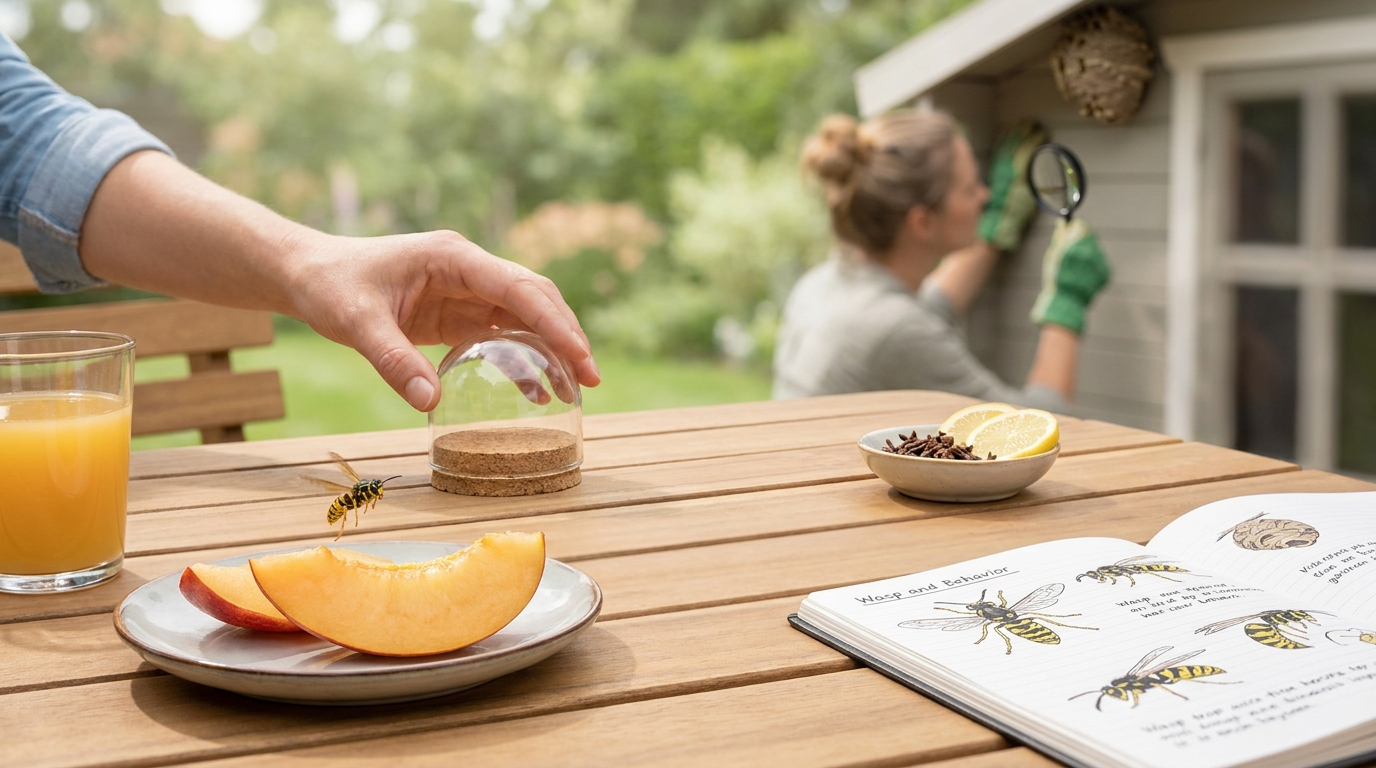
You're having lunch on the terrace, and a wasp appears. Then two. Then five. And then the drama begins: someone waves their arms, the wasp panics, and everyone starts running. A classic August scene. But why are wasps so aggressive at this particular time of year? It's no coincidence, nor is it just an impression: their behavior really changes at the end of the season.
Things to remember
-
A scientific and practical look at how wasps change their behavior at the end of the season
-
We explain worker metabolic transition and colonial survival instinct to offer entomologically-based solutions for safe cohabitation.
-
why lack of food excites wasps
-
The territorial defense mechanism and the influence of warning pheromones
The answer lies in their biology. The life cycle of a wasp colony follows a very precise pattern, and once you understand it, everything becomes clear. The aggressiveness of wasps in August is not a whim: it's a question of survival. Their metabolism changes, their food source disappears, and their instinct to protect the nest intensifies. We're going to break it all down, with scientific studies to back it up, and above all give you concrete solutions for cohabiting without ending up in the emergency room.
The biology of change: why lack of food excites wasps
To understand why wasps become aggressive, we need to go back to spring. In April-May, a fertilized queen emerges from hibernation and founds a colony. She lays eggs, feeds the first larvae, and the machine gets under way. Throughout the summer, the workers, mainly of the species Vespula vulgaris in Europe, work tirelessly. Their job: hunt insects (caterpillars, flies, aphids) to feed the larvae protein.
And here's the detail that few people know: adult workers don't eat these proteins. Instead, they feed on a sweet liquid that the larvae regurgitate in exchange. It's a biological barter system called trophallaxis, described in the work of entomologist Spradbery. The larvae receive meat, the workers receive sugar. It's a win-win situation.
Except that at the end of summer, everything collapses. The queen slows down her egg-laying, then stops. The last larvae turn into new queens and reproductive males. As a result, there are no more larvae to feed, and no one to provide the sweet food for the workers. From one day to the next, thousands of workers find themselves starving, with no source of energy. The wasp's life cycle reaches its breaking point.
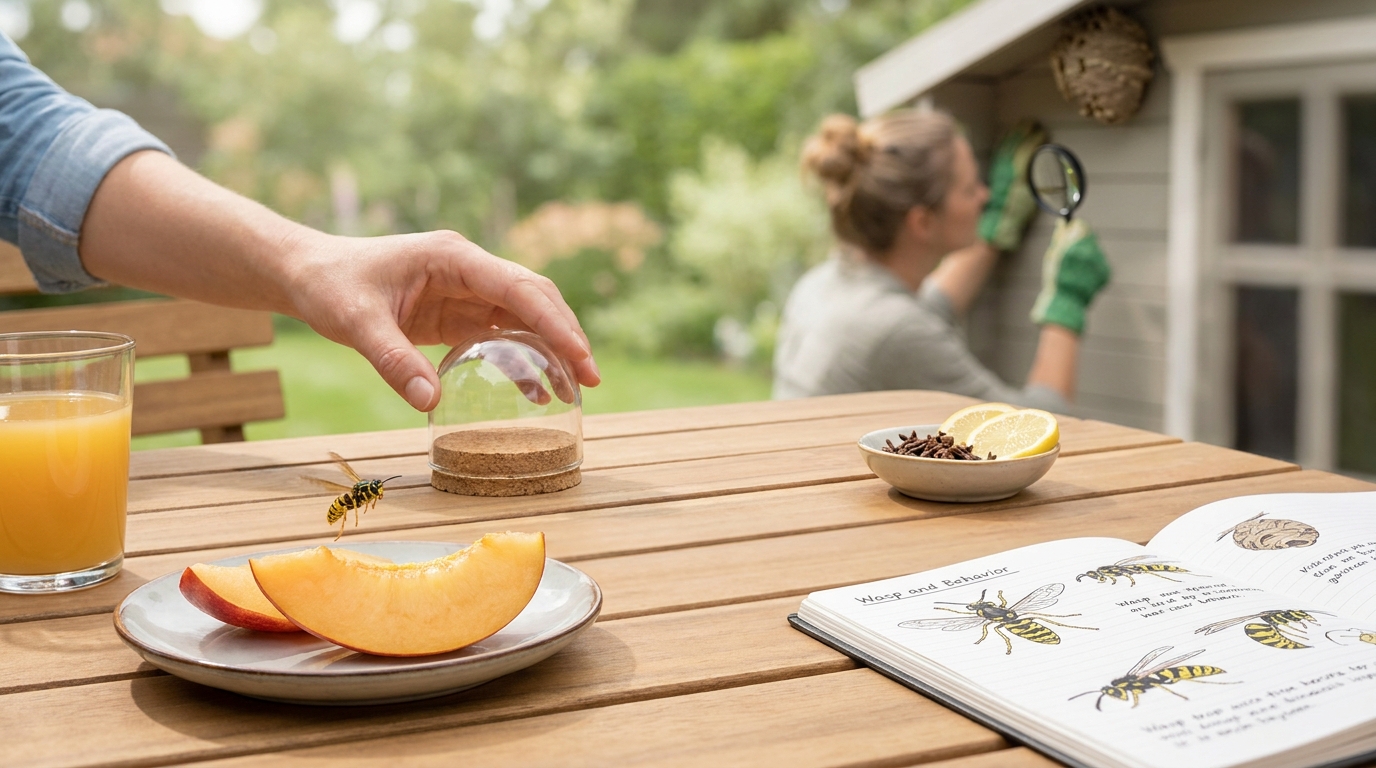
It's exactly at this time, late July-August, that the wasps land on your tables. They're not here to annoy you. They're desperate for sugar: your jam, your glass of rosé, your can of soda. The environmental stress of dwindling resources drives them to take risks they would never have taken in June. A study published in Journal of Insect Behavior shows that late-season workers cover much greater distances to find food, and become much more insistent on sweet sources.
Add to this an aggravating factor: heat. Scorching summers speed up the colony's biological cycle. The queen lays eggs faster, the larvae develop more rapidly, and the population peak (which can reach 5,000 to 10,000 individuals in a single wasp nest) arrives earlier. Why are there so many wasps in some summers? Temperature explains a large part of the phenomenon. A hot, dry summer is the perfect recipe for a population explosion followed by a massive feeding crisis.
Workers are not «mean». They're in survival mode. And a hungry animal, of any kind, becomes unpredictable.
The territorial defense mechanism and the influence of warning pheromones
Hunger doesn't explain everything. If wasps were just hungry, they'd be happy to hang around your plate. The problem is, they're also on edge for another reason: nest protection.
In August, the nest contains the colony's most precious asset: the future queens and breeding males. The colony's entire genetic line rests on these individuals. The workers, who don't reproduce themselves, have only one biological mission left: to defend these offspring at all costs. This behavior is well documented in eusocial insects, as described by entomologist E.O. Wilson in his work on sociobiology.
The defense radius around the nest widens considerably at the end of the season. In June, a wasp can tolerate your passage at a distance of two meters from the nest. In August, it can attack from five or six meters away. And when a wasp stings or feels threatened, it releases alarm pheromones, a chemical cocktail that acts as an emergency signal to all nearby workers. Within seconds, what was once an isolated wasp becomes a coordinated swarm.
These warning pheromones are both fascinating and terrifying. A study by Landolt et al (1998) identified several volatile compounds in this chemical signal, notably isopentyl acetate. This compound immediately triggers aggressive behavior in conspecifics. Translation: if you squash a wasp near its mates, you've literally just sounded the alarm. The others don't flee. They attack.
That's why swatting a wasp is often the worst thing you can do. Its body releases these pheromones, and you go from «one annoying wasp» to «ten furious wasps». The mechanism is automatic, chemical, impossible to reason with.
Another underestimated factor is vibration. Wasps detect ground and air vibrations with remarkable sensitivity. Mowing the lawn near a buried nest (the Vespula vulgaris often nest in the ground), slamming a door, or even walking heavily can trigger a defensive response. I've seen cases where families were stung en masse simply because a child had jumped with both feet over an underground nest they'd never spotted.
Colors also play a role. Wasps react more strongly to dark colors and sudden movements. Wearing black near an active nest significantly increases the risk of being attacked. Beekeepers know that white overalls are not an aesthetic choice.
Remember this: the aggressiveness of wasps in August is a combination of hunger, the instinct for territorial protection, and a formidably effective chemical alarm system. It's not personal. It's pure biology.
Practical guide: how to prevent attacks and react to aggression
Now that we know why wasps become aggressive, let's move on to solutions. Because understanding biology is great, but not getting stung is even better.
First rule: don't attract wasps to your table. Cover your food and drink when eating out. Open cans are a classic trap: the wasp gets in, you drink, sting in the throat. Use glasses with lids or straws. Leftover sweet food should be disposed of immediately. An open trash can with melon peelings is an open-air buffet for them.
Wasp traps work, but with limits. A trap filled with beer or sugar water will capture a few dozen workers. In a colony of 5,000 individuals, the impact is marginal. The main point of the trap is to divert their attention from your table by placing it at a distance of 10-15 meters from your feeding area. Don't place it right next to you, or you'll get the opposite effect.
If a wasp approaches, stay calm. I know, it's easier said than done. But sudden movements and panic gestures are interpreted as a threat. The wasp goes into defensive mode. Blow gently on it if it lands on you, or move away slowly. No big arm movements.
Sweet perfumes and cosmetics attract wasps. Scented sun cream, fruity deodorant, vanilla shower gel: it all looks like food for a wasp in search of sugar. In midsummer, opt for fragrance-free products when spending time outdoors.
What to do in the event of a wasp sting? Remove yourself calmly from the area, especially if you're near a nest. The bite has released pheromones, and remaining in the area exposes you to further attacks. Clean the bite with soap and water. Apply cold to limit swelling. An oral antihistamine can reduce the local reaction. For pain, paracetamol is sufficient in most cases.
Watch for signs of allergy. Around 3% of the population is allergic to wasp venom. Warning signs: swelling that extends far from the sting, generalized hives, difficulty breathing, feeling faint, drop in blood pressure. In this case, call 15 or 112 immediately. If the person has an adrenaline auto-injector pen, now's the time to use it. Don't waste any time.
To avoid wasps around the house in the long term, If you're looking for a nest, regularly inspect the areas where they build their nests: under roofs, in roller shutter boxes, in dense hedges, in holes in the ground. A nest spotted early (in May-June, when it's still small) is much easier to deal with than a mature August nest. If you find a large, active nest, don't be a hero. Call in a professional. Seriously. A wasp nest in late summer can contain several thousand individuals ready to defend their territory, and alarm pheromones can turn an amateur intervention into a catastrophe in seconds.
One last thing: wasps aren't just pests. A colony of Vespula vulgaris can eliminate several kilograms of insect pests in a single season. They also make a modest contribution to pollination. The aim is not to eradicate them, but to know how to cohabit intelligently with them, especially during the critical weeks of late summer.
Conclusion
There's nothing mysterious about wasp aggression in August, once you understand what's going on in the colony. Hungry workers at the end of the egg-laying cycle, a heightened instinct to protect the nest, and an alarm pheromone system that turns every incident into an escalation: this is the explosive cocktail of late summer.
The good news is that a few simple gestures can drastically reduce the risk: cover food, stay calm, avoid sweet scents, and above all, never crush a wasp in the presence of other wasps. If a nest has settled too close to where you live, contact a qualified professional rather than attempting intervention on your own. At Pest Patrol, that's what we're here for: to assess the situation, intervene properly, and allow you to enjoy your summer stress-free.
Frequently asked questions
Why do wasps become aggressive in late summer?
At the end of summer, the queen's cessation of egg-laying deprives the workers of the sweet liquid provided by the larvae. Hungry and in survival mode, they pounce on our food and become aggressive to protect the last queens in the colony.
Why shouldn't you swat a wasp?
When a wasp is crushed or threatened, its body releases alarm pheromones (such as isopentyl acetate) that alert its fellow wasps. This chemical signal instantly prompts other wasps in the colony to attack as a group.
What should you do if a wasp approaches you at the table?
It's essential to remain calm and avoid sudden movements, which are interpreted as threats by the insect. Move away slowly or blow gently on it to keep it at bay, but never wave your arms.
How to keep wasps away from an outdoor meal?
Always cover your food and use glasses with lids to mask sweet smells. To divert their attention, place a suitable trap 10 to 15 meters from your table, not right next to you.
When should I call in a professional to deal with a wasp nest?
As soon as the nest reaches a significant size in summer, professional intervention is essential for your safety. A mature nest contains thousands of individuals ready to defend their territory, making any attempt at amateur elimination extremely dangerous.
 Français de Belgique
  English
  Nederlands (België)