
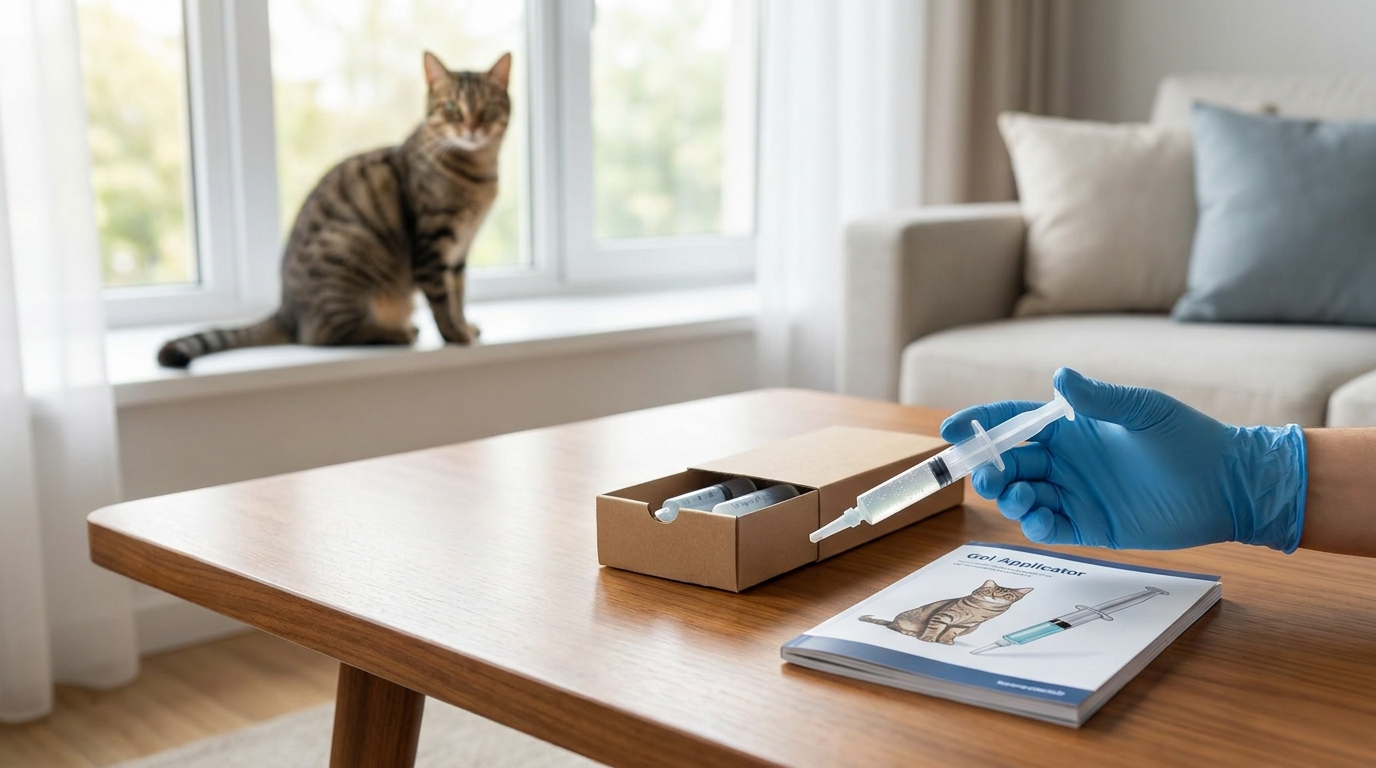
Cockroach and cat gel: how to eliminate cockroaches safely?
Contents
-
Toxicity analysis of cockroach gel for cats: what the experts say
-
Where to buy and how to choose the best anti-cafard gel at the best price for pet owners
-
Safe application protocol: key steps for treating your home safely
You've got cockroaches in the kitchen and a cat sleeping on the worktop. Two problems that add up to real anxiety. Because most commercial insecticides are designed to kill, period. Not to cohabit with a curious feline that licks everything it finds.
Things to remember
-
We go beyond simple precautionary advice by analyzing the actual toxicity of molecules (Fipronil, Imidacloprid) via veterinary sources, while providing a professional purchasing and application protocol to reconcile total eradication and animal safety.
-
what the experts say
-
Where to buy and how to choose your anti-cafard gel at the best price for p...
-
Compare options and take action.
Cockroach gel is today's most effective method against cockroaches in apartments. Pest control professionals use it almost systematically. But when you have a cat at home, the question always comes up: is this gel dangerous for my pet? The answer is not a simple «yes» or «no». It depends on the active molecule, the quantity applied and, above all, where you place the drops. We'll break it all down with hard data, veterinary sources, and an application protocol you can follow starting tonight.
The aim here is to give you a real plan of action: understand the real toxicity of cockroach gels for your cat, choose the right product at the right price, and apply it correctly for total eradication without endangering your companion.
Toxicity analysis of cockroach gel for cats: what the experts say
Let's start with the scary part: the molecules. The two active ingredients found in most professional cockroach gels are Fipronil and the’Imidacloprid. There's no doubt about it, these are powerful insecticides. The real question is their toxicity to cats at the dose present in a drop of gel.
You may already be familiar with Fipronil. It's the molecule found in flea control products such as Frontline. A study published in the Journal of Veterinary Pharmacology and Therapeutics has shown that Fipronil toxicity in cats is highly dependent on exposure route and dose. With controlled cutaneous application (pipettes), cats tolerate it well. Massive ingestion is a different story: tremors, hypersalivation, convulsions in severe cases. Except that the concentration of Fipronil in an anti-cafard gel is of the order of 0.05%, i.e. an infinitesimal quantity per drop applied.
Imidacloprid, found in gels such as Advion, belongs to the neonicotinoid family. The Centre Antipoison Animal de l'École Nationale Vétérinaire de Lyon (CAPA-Lyon) classifies cases of accidental ingestion of insecticide gel in cats as generally benign, provided the quantity ingested remains small. The most frequent symptoms of intoxication are transient hypersalivation and, more rarely, vomiting. Serious cases requiring hospitalization are exceptional.
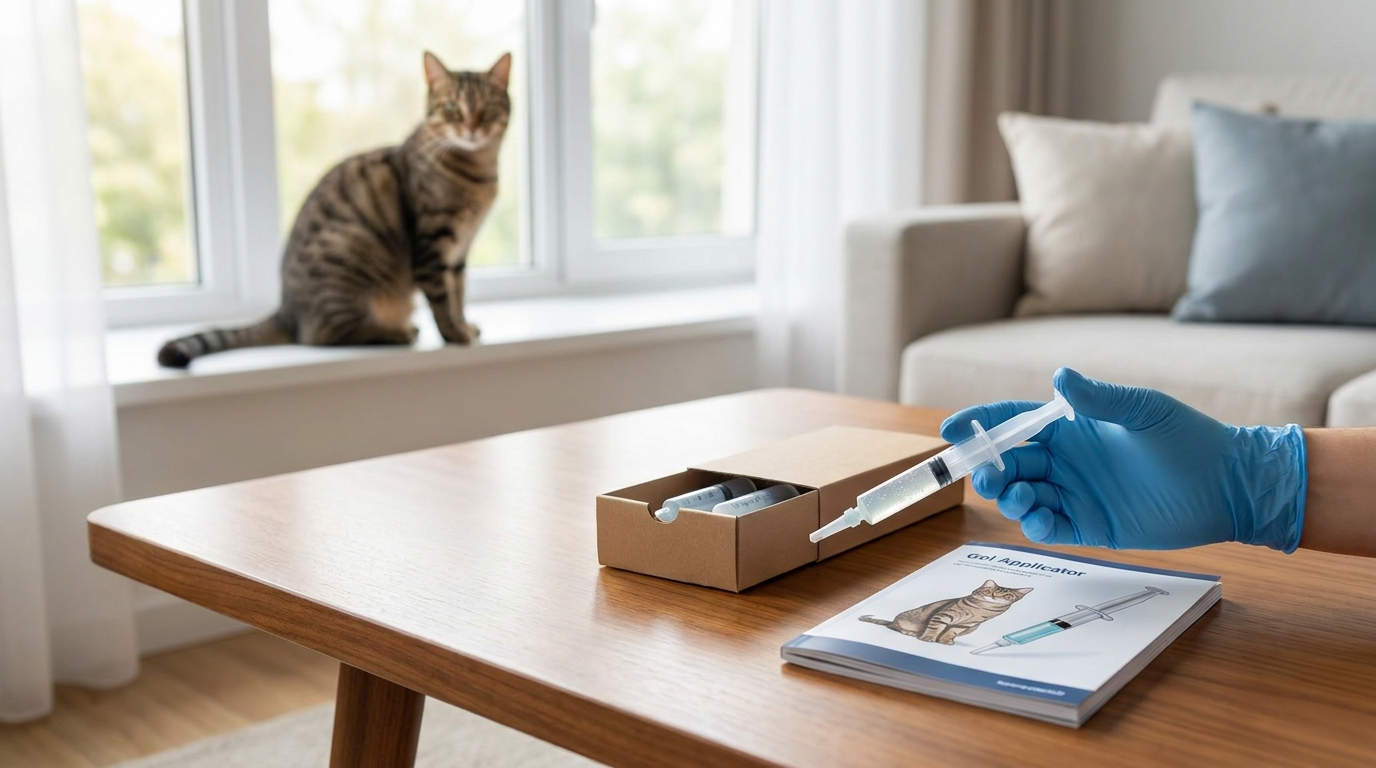
So, is the danger of cockroach gel for animals real or not? It is but proportional to exposure. A cat that licks a micro-drop of gel from a corner is not going to get poisoned. A cat accessing an entire syringe left open on the table is a problem. That's the difference.
Symptoms of intoxication to watch out for in your cat after anti-cafard treatment: excessive salivation (cat drools unusually), loss of appetite, muscle tremors, dilated pupils. If you notice any of these signs within a few hours of applying the gel, call your vet or the Animal Poison Control Center immediately on 070 245 245. Don't waste time searching on the Internet: one call is all it takes to assess the seriousness of the problem.
A point often overlooked: the risk of indirect ingestion. The cat won't necessarily lick the gel off itself. It may catch a dying cockroach that has just consumed the gel, and ingest it. This scenario is not uncommon, and is considered by veterinarians to be low-risk. The amount of active ingredient present in a cockroach's body is infinitesimal. According to veterinary toxicologist Dr. Jean-Philippe Masson, «secondary intoxication through predation by a contaminated insect is theoretically possible, but clinically insignificant in cats».
The important thing to remember: a well-applied anti-cavity gel, in areas inaccessible to cats, presents a very low risk. The real danger lies in careless application, not in the product itself.
Where to buy and how to choose the best anti-cafard gel at the best price for pet owners
35 euros. That's about the cost of a syringe of Goliath gel, the product most widely used by professional insect killers in France. And it's often the first reflex of people looking for the best cat-friendly cockroach gel: go for the «pro» product. Good idea, but there are pitfalls.
BASF's Goliath gel contains Fipronil at 0.05%. It is highly effective against German cockroaches (the small ones found in kitchens). A 35g syringe treats an apartment of 50 to 70 m². The problem is that this product is classified as a professional biocide. In theory, it can only be sold by Certibiocide holders. In practice, it can be found on specialized online sites, sometimes without verification. Be careful when you buy: a safe cockroach control gel is a product purchased from a site that clearly displays the AMM (Autorisation de Mise sur le Marché) number and the safety data sheet.
For cat owners, choosing the right gel is about more than just effectiveness. Here are the criteria that count:
-
Active molecule : Fipronil (Goliath) or Imidaclopride (Advion) are the two references. Both work by cascade effect: the contaminated cockroach returns to the nest and contaminates the others. Imidacloprid has the advantage of being the best-documented molecule in feline toxicology, as it is used in cat anti-parasitics (Advantage).
-
Gel consistency: a good gel doesn't run or dry too quickly. It has to stay in a compact drop where you put it. This is fundamental when you have a pet, because a drop that stays in place is a drop that the cat can't spread and lick off a surface.
-
Packaging: use syringes with fine tips. This allows you to deposit precise micro-droplets in cracks, behind baseboards, in places where your cat will never set foot.
Prices for professional cockroach gel range from 15 to 40 euros per syringe, depending on brand and retailer. Advion Cockroach Gel (Syngenta) costs around 20 to 25 euros for a 30g syringe. Goliath Gel runs from 30 to 38 euros. Some kits include several syringes with closed baiting stations, which is a real plus when you have pets.
Where to buy? Specialized sites such as pestpatrol.be offer these products with full technical data sheets. Avoid sellers on general marketplaces who do not mention the composition or the AMM number. A product without this information is a product whose safety for your animals cannot be verified.
What about «natural» alternatives, such as diatomaceous earth or boric acid-based gel? Let's face it: against a real infestation of German cockroaches, that's not enough. Boric acid has its own toxicity for cats (gastrointestinal irritation, kidney damage if ingested repeatedly). Just because it's «natural» doesn't mean it's safe. Professional insecticide gel, used correctly, remains the safest and most effective solution, even when you have a cat.
Safe application protocol: key steps for treating your home safely
A professional insect killer once summed it up this way: «Gel is 20% of product and 80% of investment.» He was right. The application of cockroach gel determines both the effectiveness of the treatment and the safety of your pets. Here's the protocol, step by step.
Step 1: Identify areas of cockroach activity. Before getting out the syringe, spend an evening spotting where the cockroaches are roaming. Turn on the kitchen light at 2 a.m. and you'll see them scurrying about. The classic hot spots: under the sink, behind the fridge, around the dishwasher, in the cupboards under the sink, along the pipes. Take note of these areas. They're your strategic drop-off points.
Step 2: Secure the space for the cat. During application, isolate your cat in a closed room. Not out of an abundance of caution: it's just common sense. You'll be handling an open syringe, leaning into nooks and crannies, and you don't want a curious cat sniffing the fresh gel. Once the drops have settled and dried on the surface (allow 15 to 20 minutes), you can let it circulate, provided you've followed the next step.
Step 3: Apply gel in areas strictly inaccessible to cats. This is THE golden rule for protecting pets from insecticides. Drop-off points must be :
-
Inside cabinet hinges (open door, place in hinge, close)
-
Behind baseboards, in gaps between wall and furniture
-
Under built-in appliances (cats won't go under built-in dishwashers)
-
In service shafts, pipe penetrations, wall cracks
-
Inside electrical boxes (switches, sockets: unscrew the plate, place a drop inside, screw back on)
Each deposit must be tiny: a drop the size of a pinhead is enough. The classic mistake is to use too much. More gel does not mean more effectiveness. Cockroaches are attracted to small quantities. Too much gel may even repel them, and above all, it needlessly increases the risk of exposure for your cat.
Step 4: Use closed baiting stations as a complement. If certain high-risk areas are accessible to the cat (for example, behind a piece of furniture it can walk around), use closed cockroach traps. These small plastic boxes contain the gel inside, with openings large enough for a cockroach but too small for a cat's paw. It's the ideal compromise: a cat-safe cockroach trap that's still effective. You can find them for a few euros as a complement to syringes.
Step 5: Document and monitor. Take photos of the places where you've deposited the gel. It sounds excessive, but in three weeks' time, when you want to check whether the gel has been consumed (a sign that the cockroaches have found it), you'll be glad to know exactly where to look. Place non-toxic sticky traps in high-traffic areas to monitor the infestation. If after 2 or 3 weeks you're still catching adult cockroaches, repeat the application on the same spots.
Step 6: Reinforced hygiene during treatment. An anti-cafard treatment in an apartment with a cat requires extra rigor when it comes to cleanliness. No food lying around (neither for the cat, nor for you). The cat's bowl must be washed and put away after each meal. Crumbs, cooking grease, stagnant water in the sink: these are all competing food sources that reduce the attractiveness of the gel. The less food available, the more cockroaches will gravitate towards the gel. And the faster you get rid of them.
This protocol is exactly what insect control professionals do when they work on private homes with pets. The difference between a failed treatment and a successful one is almost never the product. It's the method.
Conclusion
Eliminating cockroaches when you have a cat is perfectly feasible. Cockroach gel remains the most effective solution, and with a rigorous application protocol, the risk to your pet is minimal. Choose a professional gel with a documented molecule (Fipronil or Imidaclopride), apply micro-droplets exclusively in areas inaccessible to your cat, and supplement with closed baiting stations if necessary.
If the infestation persists after two applications spaced three weeks apart, or if you're not comfortable handling the product in the presence of your pet, call in a professional exterminator. Tell him you have a cat: he'll adapt his protocol accordingly. Your peace of mind is well worth a call.
Frequently asked questions
Is cockroach gel toxic for cats?
The risk is real, but proportional to exposure and quantity ingested. The active molecules (Fipronil or Imidacloprid) are present in minute doses (around 0.05%) in a micro-drop of gel, making serious poisoning very rare if the product is applied correctly. A cat licking a tiny amount usually risks only transient hypersalivation, whereas massive ingestion of the whole syringe represents a real danger.
Can my cat be poisoned if it eats a dead or dying cockroach?
No, the risk of secondary poisoning through predation is considered clinically insignificant by veterinary toxicologists. The quantity of insecticide contained in the body of a single cockroach is far too small to affect your feline's health.
What are the symptoms of insecticide gel poisoning in cats?
Warning signs include excessive salivation (drooling), muscle tremors, vomiting, loss of appetite or dilated pupils. If you observe any of these symptoms after treatment, contact your veterinarian or Animal Poison Control Center immediately.
Where should the gel be applied so that the cat can't touch it?
It's essential to place the drops in areas that are strictly inaccessible to your pet. This includes the inside of cabinet hinges, the back of baseboards, the underside of built-in appliances or the inside of electrical boxes.
Are roach traps or closed baiting stations recommended for use with pets?
Yes, the use of closed bait boxes or stations is ideal for pet owners. These traps contain the insecticide gel inside plastic walls: the openings are large enough to let cockroaches through, but too small for a cat's paw to reach the product.
Are natural alternatives such as boric acid safer for my cat?
Not necessarily, because «natural» does not mean safe for our companions. Boric acid is irritating to the cat's gastrointestinal tract and can cause kidney damage if ingested repeatedly. What's more, these solutions are often insufficient to eradicate a real infestation of German cockroaches.
 Français de Belgique
  English
  Nederlands (België)