
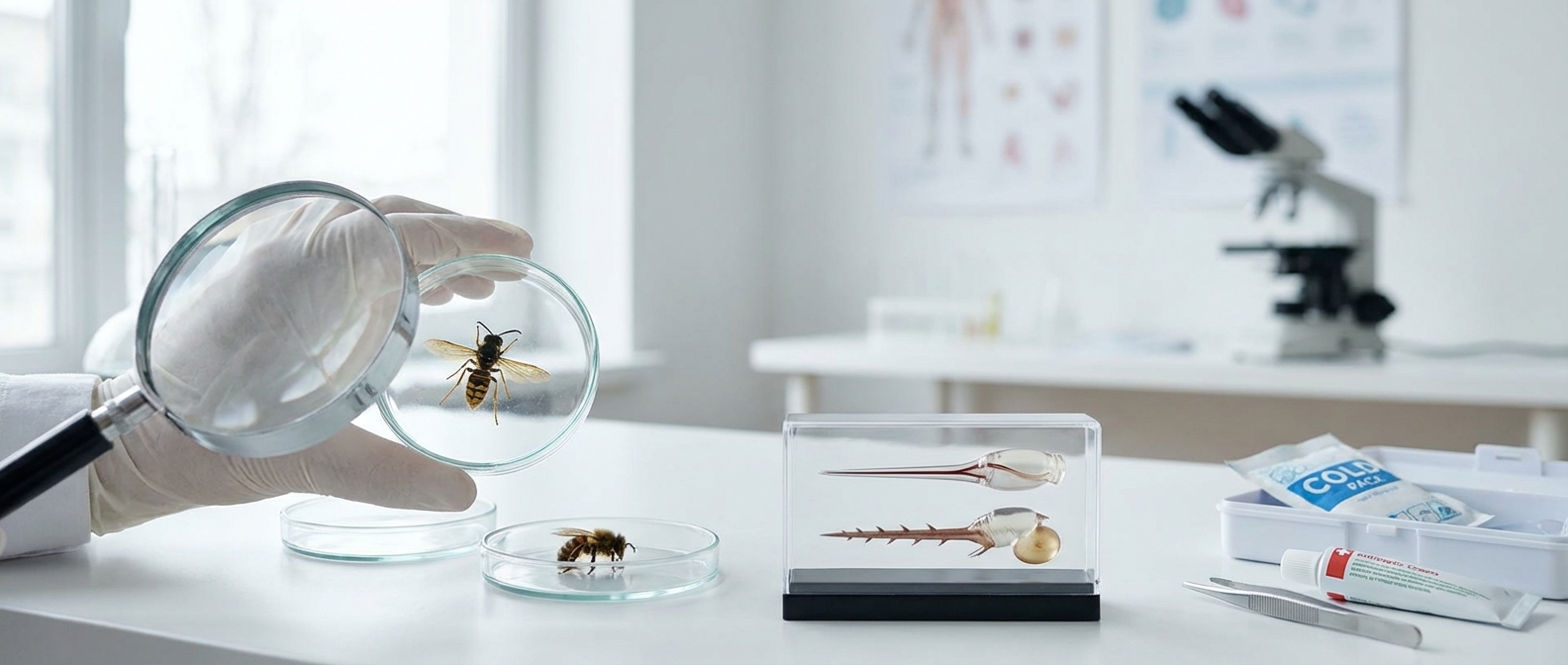
Does a wasp die after stinging? The guide
Contents
We've all heard the phrase at least once: «Don't worry, she'll die after she stings you.» Except that this belief, widespread as it is, is false. Well, part of it. It applies to bees, not wasps. And the confusion between the two lives on.
Things to remember
-
We deconstruct the myth of post-sting death by explaining the unique morphology of the Vespidae's smooth stinger compared to bees.
-
Pest Patrol brings scientific expertise to reassure the public while providing a rigorous safety protocol for multiple bites.
-
Why wasps survive their stings
-
Can a wasp sting more than once?
At Pest Patrol, we answer this question several times a week, especially in summer when nests multiply and terraces become areas of conflict between humans and Vespidae. So let's set the record straight once and for all: no, a wasp doesn't die after stinging. It can even do it again. Many times over. And that's precisely what makes it more problematic than a bee in many situations.
This guide explains why, from a biological point of view, wasps survive their stings, how they can sting you repeatedly, and above all what to do if it happens to you. With scientific sources, not barbecue hearsay.
Anatomy and biology: why wasps survive their stings
It's all about the stinger. The bee's stinger is barbed, like a small harpoon: once planted in the skin, it remains stuck. When the bee tries to free itself, it tears off part of its abdomen. The result: death within hours. It's brutal, but it's the reality of the bee's anatomy.
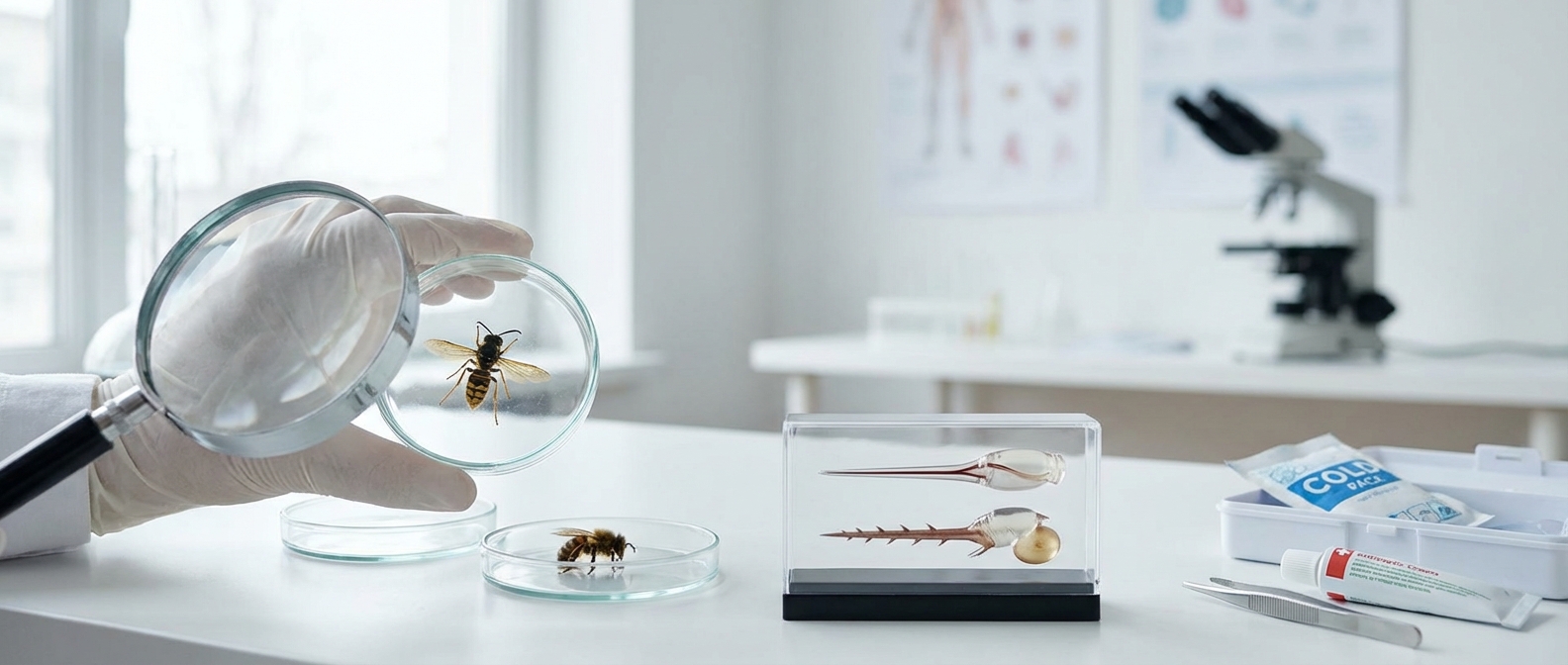
The wasp, on the other hand, has a smooth stinger. No hooks, no barbs. It pushes in, injects, withdraws. Cleanly. Its venomous apparatus remains intact, ready for use again. A study published in the Journal of Hymenoptera Research describes this morphological difference as one of the key factors explaining the more aggressive behavior of wasps in situations of perceived threat: they simply have nothing to lose by stinging.
The wasp's anatomy deserves a closer look. The stinger is in fact a modified ovipositor, i.e. an organ originally designed to lay eggs. In species of the Vespidae family (common wasps, hornets, polistes), this organ has evolved into a defensive weapon. In fact, only females sting. Males have no sting.
The difference between bees and wasps goes beyond the stinger. The bee is stocky, hairy and rather round. The wasp is slender, with a very pronounced waist between the thorax and abdomen (the famous «wasp waist», not by chance). Its cuticle is smooth and shiny, often striped yellow and black in well-defined patterns. When you see a striped insect circling your plate, look at its silhouette: if it's slender and hairless, it's probably a wasp.
Another important point that few people know: can a dead wasp still sting? Technically, yes. The stinger can still penetrate the skin by muscular reflex for a few minutes after the insect's death. It's rare, but it happens, especially when you walk barefoot over a wasp that's been crushed to the ground. The venom contained in the gland can still be injected by simple mechanical pressure. So, even if it's dead, don't handle it just like that.
To sum up pure biology: the wasp survives its sting because its smooth stinger allows it to withdraw without damage. The bee dies because its barbed stinger remains planted. Two radically different evolutionary strategies, two very different consequences for you if you're the target.
Nuisance capacity: can a wasp sting more than once?
Yes, without hesitation. And that's what makes an encounter with a wasp nest so much more dangerous than with a lone bee.
A wasp can inflict multiple stings in a matter of seconds. Where a bee stings only once (and dies as a result), a wasp can sting five, ten or even fifteen times if it feels sufficiently threatened. Each sting injects a dose of venom. And these doses accumulate.
Wasp venom is a fairly aggressive cocktail. It contains phospholipase, hyaluronidase and peptides such as mastoparane. Phospholipase destroys cell membranes, causing immediate pain and inflammation. Hyaluronidase, on the other hand, acts as a «diffuser»: it degrades connective tissue so that the venom spreads more rapidly to surrounding tissues. According to a review published in Toxicon (2018), the composition of wasp venom varies from species to species, but the overall effect remains the same: sharp pain, swelling, redness.
Why does a wasp sting? Its defensive behavior is triggered by what it perceives as a threat to itself or its colony. Sudden movements, vibrations and certain odors (sweet perfumes, sweat) can excite them. Contrary to popular belief, wasps don't sting «for pleasure». They're defending a territory or a food source. The problem is that its definition of «threat» is rather broad.
One thing parents need to know: when a wasp stings, it releases an alarm pheromone. This chemical signals to other wasps in the area that there is danger. As a result, if you're near a nest and a wasp stings you, other wasps can swarm to reinforce you. That's how you end up with group attacks, and that's when things get really risky.
Do wasps die when they sting? No, and that's precisely why a single wasp represents a risk of multiple stings. Whereas the bee «invests» its life in a single defensive sting, the wasp can stalk its target over a prolonged period. Data from the Anses (Agence nationale de sécurité sanitaire) show that in France, deaths linked to Hymenoptera stings (around twenty a year on average) are often associated with multiple stings or severe allergic reactions, not with a single sting.
Remember: when faced with an aggressive wasp, the best strategy is to move away calmly, without sudden movements. Don't hit it, don't blow on it. You'll only aggravate its defensive behavior.
First aid guide: what to do in the event of a wasp sting?
You've just been stung. It burns, it swells, and you wonder if it's serious. In 95% of cases, a wasp sting is painful but benign. Here are the first-aid measures to be applied immediately, and the warning signs not to be ignored.
First thing: don't look for a stinger to remove. Remember: the wasp keeps its stinger. If you see a stinger stuck in your skin, it's probably a bee that stung you, not a wasp. In this case, remove it by scraping with the edge of a bank card (don't pinch with your fingers, you'll squeeze the venom pocket).
To soothe the pain of a wasp sting:
-
Clean the area with soap and water. Basic, but essential to avoid superinfection.
-
Apply approximate heat (without direct contact) for 1-2 minutes. Wasp venom is thermolabile: heat degrades some of its proteins. A lighter held 2-3 cm from the skin or a Bite Away-type device does the job.
-
Then apply cold (an ice cube wrapped in a cloth) to reduce swelling and numb pain.
-
An oral antihistamine (such as cetirizine) can limit local reactions if they are not too severe.
-
Avoid scratching. Yes, it's tempting. No, it doesn't help.
Pain generally disappears within a few hours. Swelling may persist for 24 to 48 hours, sometimes longer if the sting is in a sensitive area (eyelid, lip, finger). It's unpleasant, but not dangerous in itself.
When should you worry? That's the real question. A wasp sting can be fatal, but only in specific cases. The main danger is a systemic allergic reaction, which can lead to anaphylactic shock. Signs to watch out for :
-
Swelling that extends well beyond the puncture site (e.g. the whole arm)
-
Generalized hives (red patches all over the body)
-
Difficulty breathing, sensation of throat tightening
-
Dizziness, drop in blood pressure, malaise
-
Nausea or vomiting
If one or more of these symptoms appear, call 112 (SAMU) immediately. Don't «wait and see». Anaphylactic shock can develop in a matter of minutes. People who know they are allergic to Hymenoptera venom should always carry an adrenaline auto-injector pen (such as EpiPen or Anapen), prescribed by an allergist.
According to the Société Française d'Allergologie, around 3% of the French population is allergic to hymenoptera venom. This may seem a small number, but compared with the millions of stings that occur every summer, it represents a significant number of potential emergency situations.
Beware, too, of stings in the mouth or throat (they happen when you drink from a can without looking). Even without an allergy, local swelling can obstruct the airways. Go to the emergency room, no questions asked.
One last point: if you've been stung more than twenty times (nest attack, for example), seek medical advice even if you have no allergic reaction. The total quantity of venom injected can cause a systemic toxic reaction, different from allergy but just as dangerous. The kidneys and liver can be affected. This is not a frequent occurrence, but it does happen, and emergency physicians are familiar with this clinical picture.
Conclusion
So, does a wasp die after stinging? No. Its smooth sting allows it to sting, withdraw and sting again as many times as it deems necessary. It's the bee, with its barbed sting, that loses its life. To confuse the two is to underestimate the real risk posed by an aggressive wasp, especially near a nest.
The good news is that the vast majority of bites are harmless. Clean, warm, cool and it goes away. The bad news is that serious allergic reactions do exist, and they're not always preventable. If you have the slightest doubt about your reaction or that of someone close to you, call 15.
Have you spotted a wasp nest in your home or garden? Don't try to destroy it yourself. Contact Pest Patrol: we'll intervene quickly, safely and get rid of the problem before it gets out of hand.
Frequently asked questions
Why doesn't a wasp die after stinging?
Unlike the bee, the wasp has a smooth, barbless stinger. This enables it to withdraw its sting from human skin without tearing its abdomen, staying alive and ready to sting again.
How many times can a wasp sting in a row?
A single wasp can inflict several successive stings in a matter of seconds. Since it never loses its sting, it can inject venom repeatedly as long as it feels threatened or defends its nest.
What to do immediately after a wasp sting?
There's no need to look for a sting (she's kept it). Clean with soap and water, then approach a source of heat (such as a hair dryer or hot water), as the venom is thermolabile. Then apply cold to calm the inflammation.
When should you worry after a sting?
Seek urgent medical attention if you experience breathing difficulties, facial swelling (angioedema) or generalized malaise. These signs indicate a severe allergic reaction or anaphylactic shock requiring immediate medical attention.
 Français de Belgique
  English
  Nederlands (België)